10 hr
Auschwitz-Birkenau Memorial Tour with Krakow Hotel Transfer
Visit the preserved sites of history's darkest chapter with expert guidance and comfortable transport
Reserve
Reserved entry with expert historians, hotel transfers included
Hand-picked by our editors — only the best 5 experiences from 12 reviewed.
Verified partners for every tour, free cancellation where available, and instant confirmation on every booking.
10 hr
Visit the preserved sites of history's darkest chapter with expert guidance and comfortable transport
Reserve
8 hr
Full-day guided visit to Auschwitz I and Birkenau with skip-the-line entry and round-trip transport.
Reserve
11 hr
Journey through Poland's most significant historical sites in one comprehensive day trip with expert guides
ReservePrices from verified partners. Availability updates in real time at checkout. Free cancellation policies apply where shown.
The landmarks, rooms, and views travelers on this tour remember — all visible on a single visit.
The infamous entrance gate featuring the distorted lettering known globally from the camp's history.
The site of the 'Death Block' where prisoners faced harsh punishments and interrogations.
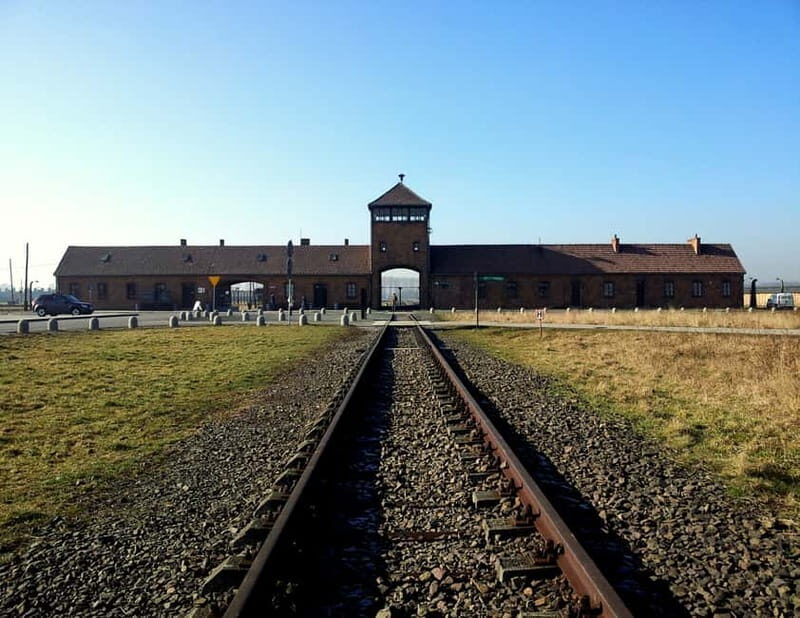
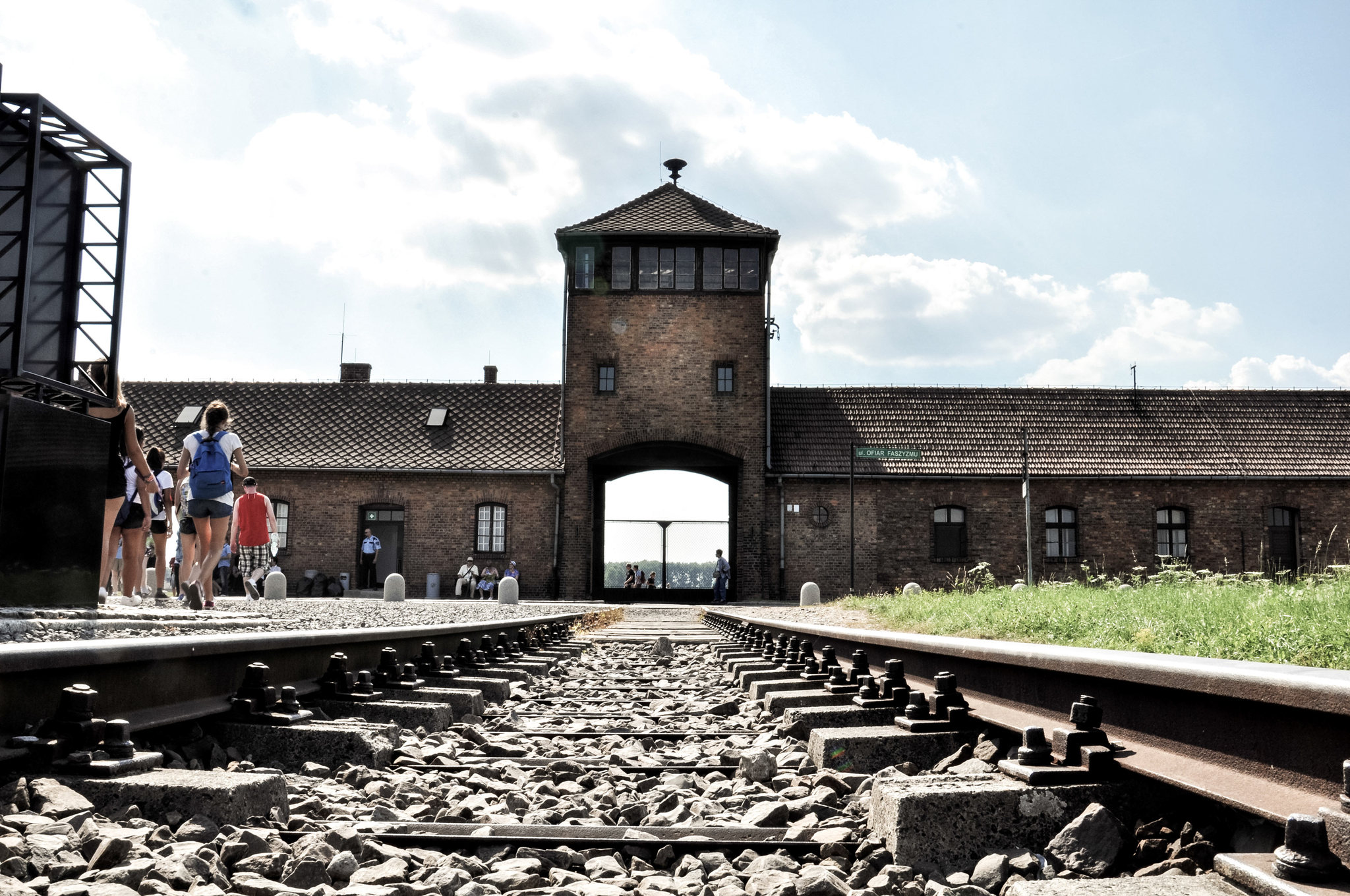
The iconic main guard tower and entrance to the vast Birkenau camp site.
The site where the tragic history of the gas chambers remains visible today.
Hundreds of these primitive structures remain across the vast Birkenau field.
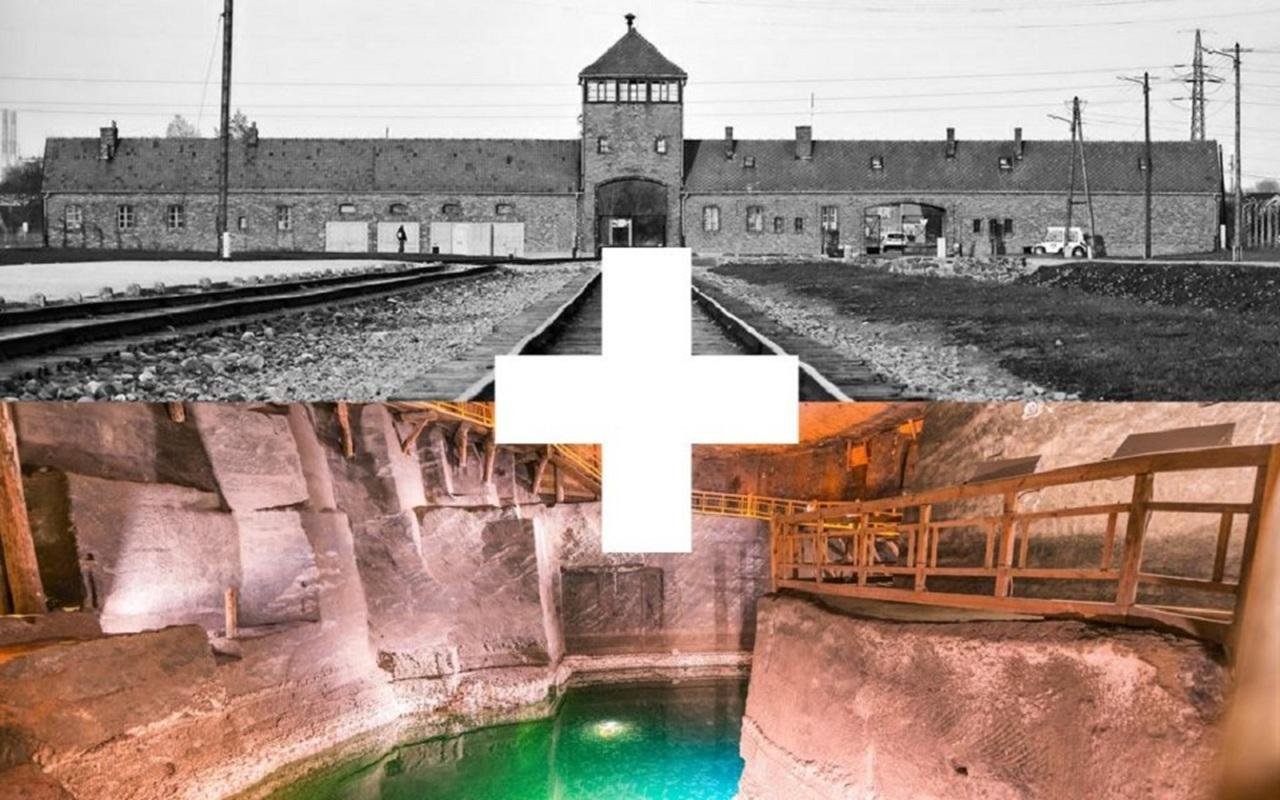
They serve distinct purposes; visitors often find the solemn reflection of an auschwitz tour from krakow stands in stark contrast to the subterranean exploration of the salt mine. Choosing between these Krakow landmarks depends entirely on your capacity for historical engagement versus geological wonder.
| Feature | Top pick Auschwitz-Birkenau | Wieliczka Salt Mine |
|---|---|---|
Experience intensity |
High solemnity | Technical and visual spectacle |
Physical exertion |
Moderate walking | High, including stairs |
Educational focus |
Holocaust history | Geology and mining technology |
Logistical demand |
High reservation requirements | Moderate availability |
Emotional weight |
Heavy and somber | Light and curious |
Setting |
Memorial and museum | Underground salt chambers |
| See tickets → |
Verdict: Securing your auschwitz tour from krakow tickets early is vital, whereas acquiring salt mine access offers more flexibility for those seeking a less emotionally taxing afternoon.
Choose your ticket, select your date, and reserve in under two minutes. Secure checkout handled by our verified partner.
Instant confirmation by email, with a mobile voucher you can save offline. No printing, no queuing at a collection desk.
Arrive at the entrance, show your voucher on your phone, and walk in. Most tickets include priority or skip-the-line access.
Practical details for your visit straight from our verified partners — hours, access, rules, and how to get there.
Więźniów Oświęcimia 55
Meeting point for most Krakow tours
Follow signs to Oświęcim; parking available at the site
Train or bus from Krakow to Oświęcim station
Visitors are expected to dress respectfully, keeping in mind the solemn nature of the memorial site. Modest attire that covers shoulders and knees is recommended, as this is an outdoor-heavy experience.
Security checks are mandatory for all guests entering the grounds. Only small bags or backpacks not exceeding 35x25x15 cm are permitted inside.
Photography is generally allowed for private, non-commercial purposes without flash or tripods. However, it is strictly prohibited inside certain exhibition halls, particularly the Victims' hair room in Block 4 and the basement of Block 11.
The site has uneven terrain and historic thresholds which can be challenging for visitors with limited mobility. It is recommended to contact the museum directly for specialized assistance and route guidance.
Mobile phones should be set to silent mode during your visit. Please be mindful of others and avoid taking calls while on the grounds.
While children are permitted, the memorial is generally not recommended for children under 14 due to the sensitive and heavy historical content. Parents should prepare them for a somber experience.
Food and drink are not permitted inside exhibition buildings to maintain the dignity of the site. Visitors should consume refreshments outside the museum premises.
Pets are not permitted on the memorial grounds. Only certified service animals are allowed, provided they remain under control.
As the Auschwitz tour from Krakow involves extensive walking, choosing comfortable, closed-toe footwear is essential for your comfort and safety.
Best time to go, insider tips, nearby landmarks, and the cancellation fine print — flip through to skim what matters to you.
How crowds, weather, and events shift across the year.
Mild temperatures and fewer crowds make this a good time to reflect.
Peak tourist season with longer hours, often requiring early booking.
Comfortable weather for walking between camp sites.
Quiet and somber, ideal for a more personal experience despite cold temperatures.
Small details that turn a good visit into a great one.
Timed entry slots for any Auschwitz tour from Krakow sell out fast.
Remain with your group to ensure you follow the official guided path.
Check the forecast as much of the visit is outdoors.
Maintain quiet and solemn behavior throughout the grounds.
Original documentation is required for entry verification.
Avoid carrying large bags to speed up your security check.
Non-bookable sights within a short walk — free to visit, easy to pair.
Historical site overlooking the local town
Features synagogue and history of local community
Central hub of Oświęcim town
Flexible, no hidden fees.
Entry tickets are non-refundable once booked. Please check the specific terms of your Auschwitz tour from Krakow operator regarding transfer cancellations.
Hand-picked options within walking distance — pick a district for vibe, or a specific hotel for convenience.
Convenient access to the memorial
Between 1940 and 1945, more than 1.1 million people — ninety percent of them Jewish — were murdered at Auschwitz-Birkenau, the largest German Nazi concentration and extermination camp complex. Built on the outskirts of Oświęcim, a quiet Polish town sixty-six kilometers west of Krakow, the site originally comprised Auschwitz I, the main administrative camp, and Auschwitz II-Birkenau, constructed in 1941 to expedite the Final Solution. Today, both sites function as a memorial and museum, preserving twenty-eight brick barracks, guard towers, railway tracks, and the remnants of four crematoria as evidence of systematic genocide. The memorial opens daily at seven-thirty in the morning, and entry is free, though advance online reservations are mandatory. Most visitors arrive on organized tours from Krakow that include round-trip transportation and an educator certified by the Auschwitz-Birkenau State Museum. Guides provide context that raw documentation alone cannot — explaining the bureaucratic architecture of extermination, the forced labor economy, and the personal stories behind confiscated belongings now displayed in Block 5. The site's scale defies intuition: Birkenau alone covered one hundred and seventy-five hectares at its peak, with three hundred barracks housing up to one hundred thousand prisoners simultaneously. UNESCO designated Auschwitz-Birkenau a World Heritage Site in 1979, recognizing it as material evidence of industrialized murder and a warning across generations. Auschwitz tour from Krakow visits typically allocate three and a half hours on-site, split between Auschwitz I and the Birkenau expansion two kilometers away. Winter light fades early over the birch forest that gave Birkenau its name, and snow mutes the landscape into monochrome. Spring and autumn bring school groups from across Europe, part of mandatory Holocaust education curricula. The conservation team works year-round to stabilize wooden barracks rotting from groundwater and to digitize prisoner records stored in climate-controlled archives. Approximately two million people visit annually, making it among the most-visited memorial sites worldwide, yet silence prevails inside the blocks where suitcases, eyeglasses, and human hair remain behind glass as forensic testimony.
"UNESCO designated Auschwitz-Birkenau a World Heritage Site in 1979, recognizing it as material evidence of industrialized murder and a warning across generations."
A step-by-step walkthrough of the visit — what you'll see, how long each stage takes, and the details that matter.
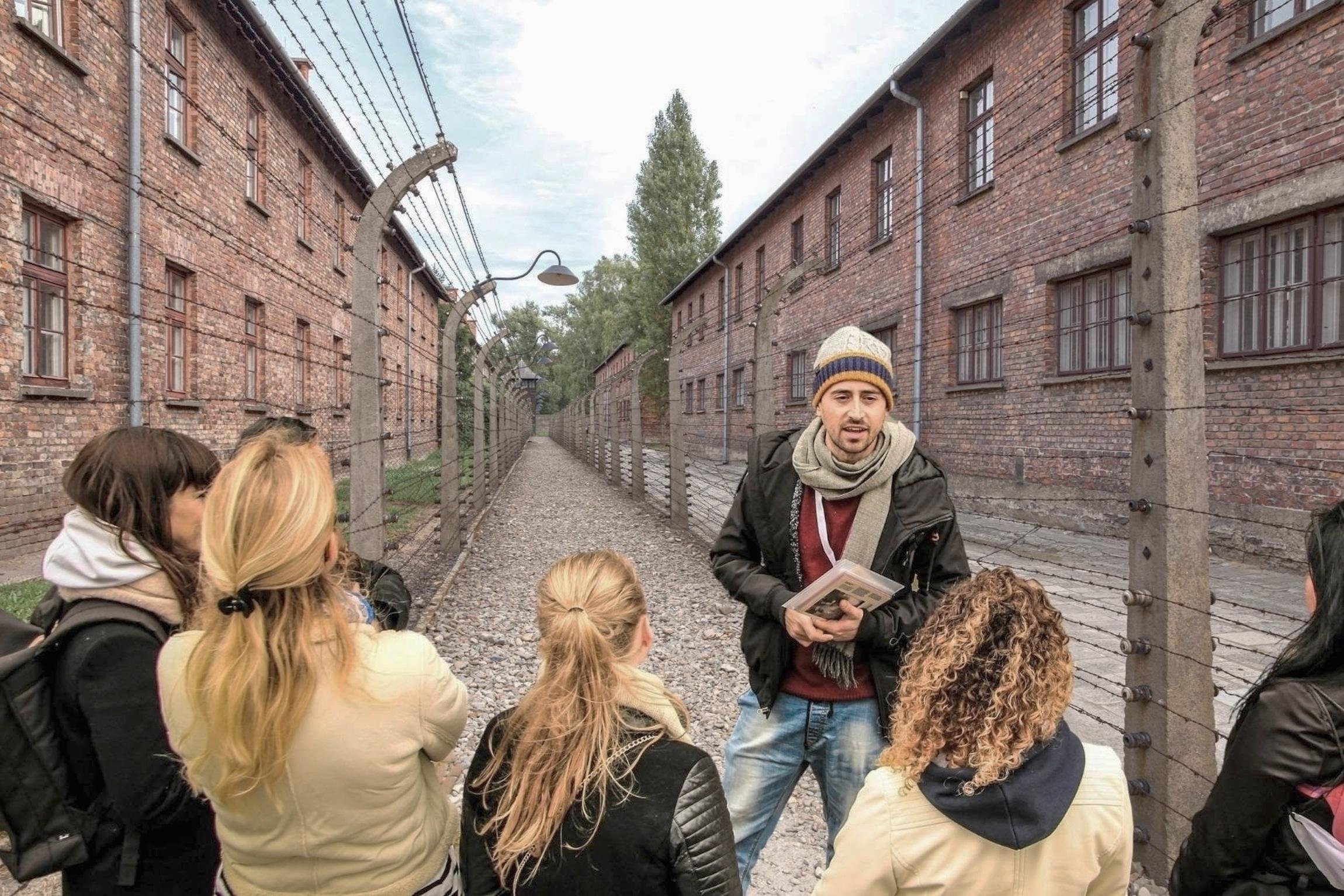
You leave Krakow before eight in the morning, watching the city's baroque skyline recede as your coach heads southwest on the A4. The drive takes ninety minutes through flat agricultural land punctuated by birch groves. At Oświęcim, your guide distributes audio receivers and leads you through the wrought-iron gate bearing the inscription Arbeit Macht Frei — work sets you free, a slogan designed to deceive arrivals. You walk slowly through Block 4, where four tons of human hair are displayed behind protective glass, and Block 5, where thousands of shoes — tiny children's sandals among them — form silent testimony. The narrow corridors between brick barracks amplify the oppressive geometry: straight lines, hard angles, watchtowers at cardinal points. Your group boards the shuttle to Birkenau two kilometers north. Here, the scale expands beyond comprehension. Railway tracks run straight to the unloading platform where SS physicians conducted selections. You stand at the threshold of Crematorium II, its underground gas chamber and furnace rooms reduced to rubble by retreating guards in January 1945. Your guide recounts the logistics: eighteen hundred people could be gassed simultaneously, their bodies incinerated within hours. You return to the entrance as afternoon light slants across the rails, completing a visit that takes three and a half hours but reverberates far longer.
The site is open daily from 07:30–19:00, with your Auschwitz tour from Krakow start time depending on the provider.
Accessibility is limited due to the historic nature of the site, but some areas have ramps.
Only small bags up to 35x25x15 cm are permitted on an Auschwitz tour from Krakow.
Photography is allowed in most outdoor areas for personal use, but forbidden in specific exhibition blocks.
Arriving early between 07:30–09:00 is the best way to avoid the mid-morning crowd of an Auschwitz tour from Krakow.
Dress modestly and respectfully as you would for a funeral or sacred place.
Eating is not permitted inside the memorial buildings; please plan accordingly.
You can take a train, bus, or private transport from Krakow to the address at Więźniów Oświęcimia 55.
The site is not recommended for children under 14 years old.
Individual entry cards reserved online are generally non-refundable.
You can combine your trip with a visit to the historic Wieliczka Salt Mine or Schindler's Factory.